
11 November 2026
Check My Essay: What to Review Before You Submit
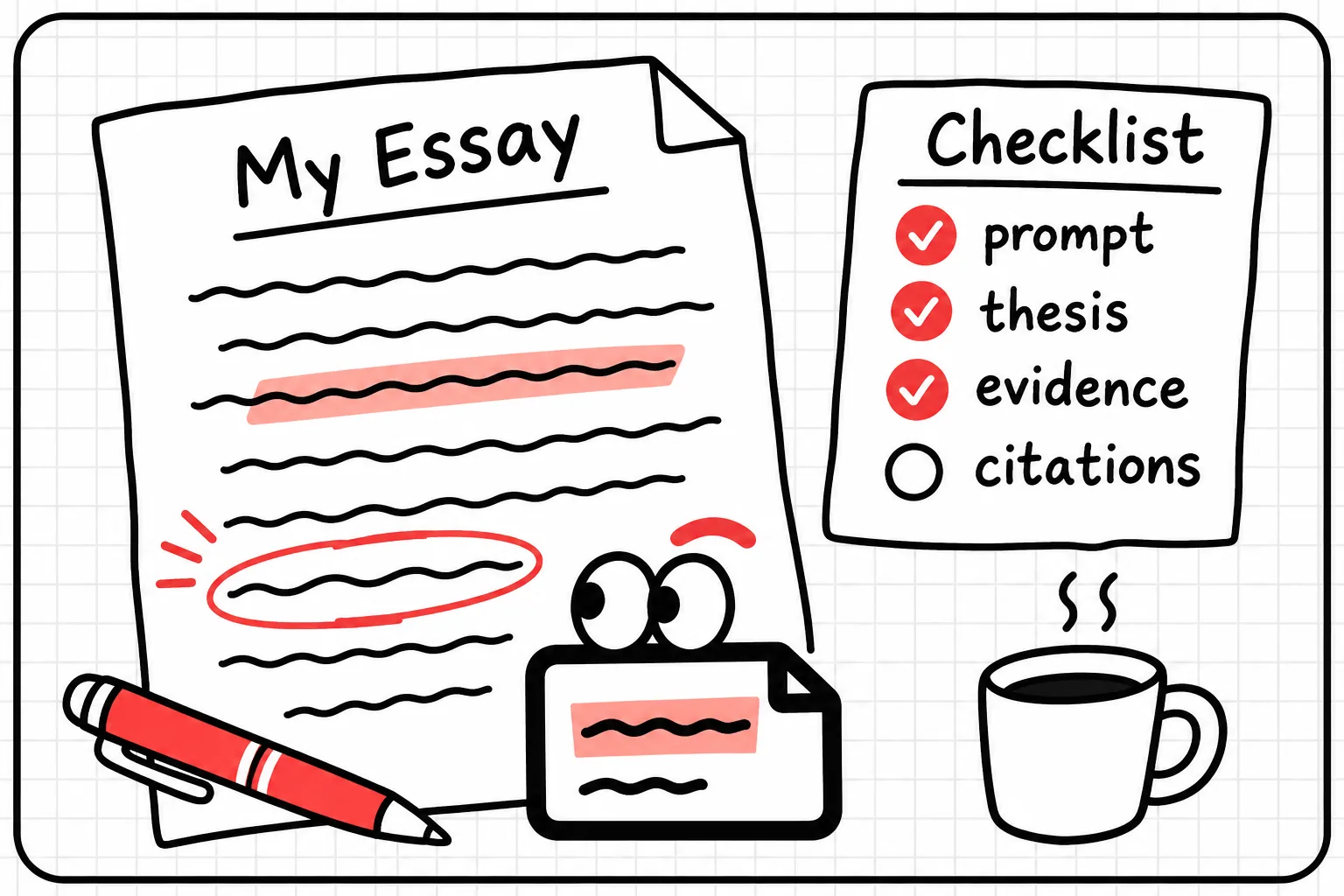
Most students "check" an essay by rereading it from the top and fixing typos. That catches the smallest problems and misses the expensive ones. A professor grading your paper reads it the other way around: they look for an answer to the prompt, a clear argument and real evidence first, and notice the commas last.
So check your essay in the same order. Big problems first, small ones last, because fixing your argument can rewrite paragraphs you already proofread.
1. Does it answer the prompt?
Reread the assignment, not your essay. Underline every verb in the prompt: analyze, compare, argue, evaluate. Each one asks for something different. An essay that summarizes when the prompt says "evaluate" can be well written and still get a low grade.
Then check the practical requirements: word count, number and type of sources, citation style and due date. Rubrics usually spell these out, and they're free points.
2. Is your thesis clear and arguable?
Find your thesis statement and read it on its own. A reader should know your position and roughly how you'll support it. If your thesis states a fact nobody would disagree with, or could fit any essay on the topic, it needs work.
3. Does every paragraph serve the thesis?
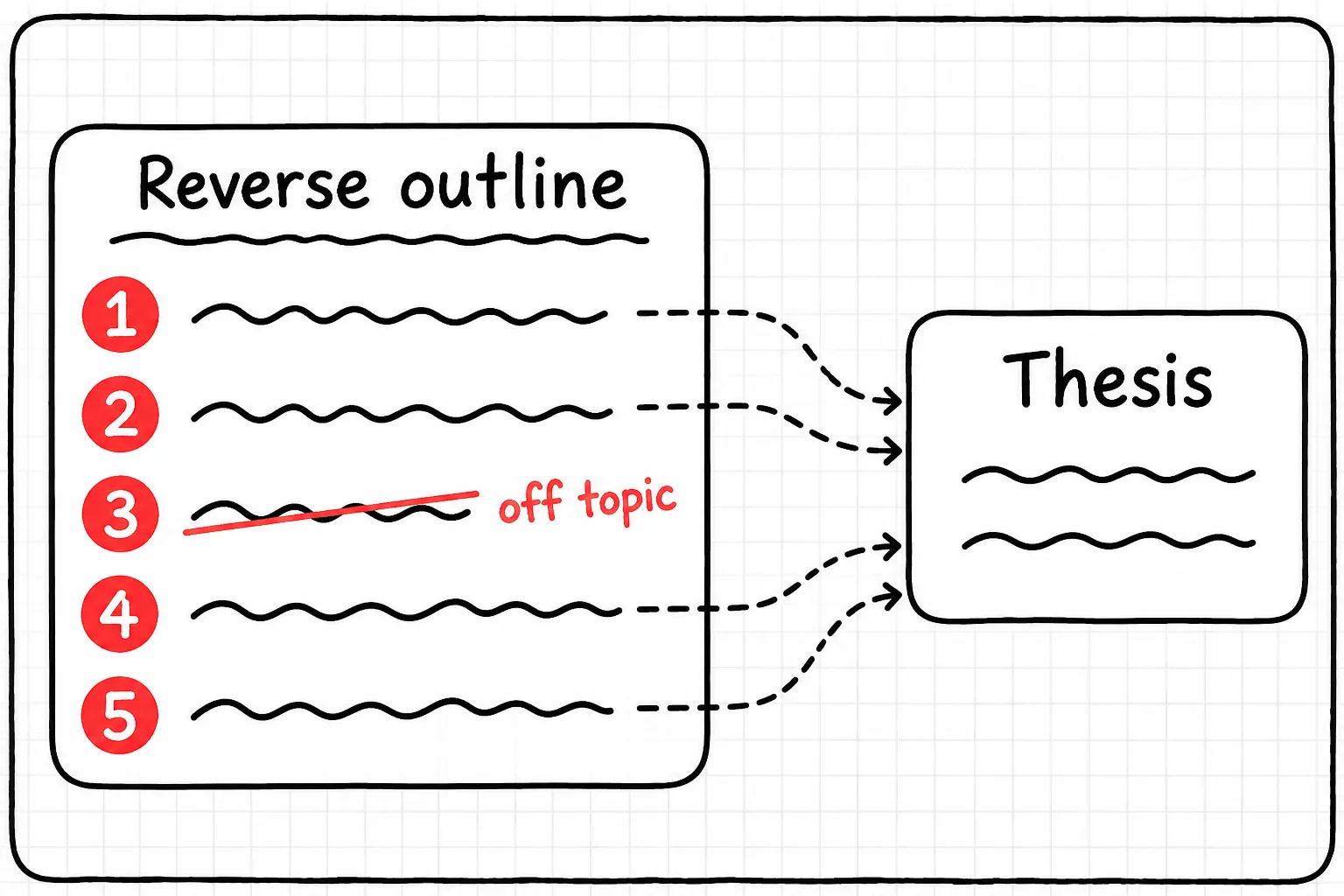
Make a reverse outline. Write one short line per paragraph saying what it argues. Then look at the list:
- Does each line connect back to your thesis?
- Are the paragraphs in an order that builds, or could you shuffle them without anyone noticing?
- Is any point made twice?
Writing centers recommend this exercise for a reason. It shows structure problems in two minutes that rereading never will (UNC Writing Center).
4. Is every claim backed up?
Go through each paragraph and mark every claim. Next to each one, you should be able to point to evidence: a quote, data, an example or a cited source. Claims with nothing next to them are where professors write "source?" in the margin.
Then check the evidence itself. Does each quote actually support the point you attach to it, and do you explain why it matters, instead of dropping it in and moving on?
5. Are your citations real and correct?
Check that every source exists and says what you claim, especially if you used AI anywhere in your research. Then check the format. These guides cover each step:
6. Is it your own work?
If you paraphrased a source closely, quoted without quotation marks, or reused parts of an earlier paper, fix it now. Many schools run submissions through a plagiarism checker, and close paraphrasing gets flagged even when you cited the source.
7. Now proofread
Only now go line by line for grammar and spelling. Two tricks make it far more effective:
- Read it out loud. You'll hear missing words and clumsy sentences that your eyes skip.
- Change how it looks. Print it, or switch the font and size. A fresh layout makes familiar text look new, so you notice more.
Get a second reader
You know what you meant to say, so you read it into your own essay. A second reader doesn't. A friend, a tutor or your school's writing center can all help, as long as you leave enough time.
PickyProf is a second reader you can use at 11pm. Upload your essay and it reviews it the way a picky professor would: your argument and structure, whether your claims are backed up, your citations and whether your sources exist, plus a plagiarism check. You get each issue flagged where it happens, with what to change.
Want to know your essay is ready before you submit it? Check your essay with PickyProf.
